
Choosing a Lab centrifuge begins with matching sample volume, throughput, and available bench or floor space. Priority should be RCF control over RPM for reproducible force, rotor type (fixed-angle, swinging-bucket, microplate) and tube compatibility for the intended separations, and temperature control or containment when samples are sensitive or biohazardous. Consider noise, maintenance, service access, and budget including rotor costs. A clear format choice speeds procurement, and further guidance explains practical trade-offs and selection steps.

Quick Decision Framework: Which Centrifuge Fits Your Workflow?
Which centrifuge best matches a laboratory’s routine and priorities? The evaluator assesses sample volume, throughput, and available bench space, then narrows choices to models that enable autonomy and flexibility.
Criteria include rotor types, capacity https://laballiance.com.my/, footprint, noise, and ease of use; compatibility with common tube sizes and adapters streamlines workflows. Consider maintenance needs, service access, and user interface simplicity to minimize downtime and training constraints.
Budget constraints are balanced against long-term reliability and consumable costs. Safety features—lid locks, imbalance detection, clear labeling—preserve freedom to operate without interruptions.
A short trial or demo verifies ergonomics and workflow fit. Decisions favor devices that empower technicians to adapt processes rapidly while maintaining consistent, reproducible results.
Speed: RCF vs RPM – What It Means for Your Samples
After narrowing candidates by capacity and workflow fit, attention turns to operational speed — a defining parameter that affects separation quality and sample integrity. Speed is expressed as RPM (revolutions per minute) and RCF (relative centrifugal force); RCF reflects the actual force applied to samples and depends on rotor radius, so it is the reliable metric for protocol transfer and reproducibility.
RPM may suffice for routine, same-rotor tasks, but converting to RCF ensures outcomes remain consistent across equipment. Excessive force or abrupt acceleration can damage delicate specimens; programmable profiles and gradual ramps preserve structure.
Users valuing autonomy should select centrifuges that display and allow setting RCF, offer clear conversion guidance, and support precise control for reproducible, sample-safe separations.
Rotors & Capacity: Choose the Right Centrifuge Tubes and Load
The choice of rotor and tube format directly determines usable capacity, achievable RCF, and sample balance requirements. Selection between fixed-angle, swinging-bucket, and microplate rotors shapes workflows: fixed-angle for high-speed pelleting, swinging-bucket for clear separations, and plate rotors for throughput.
Tube material and size affect maximum speed and chemical compatibility. Balance in all runs is nonnegotiable; asymmetric loads reduce rotor life and risk failure. Users seeking autonomy should match rotor geometry to tube format and planned throughput, keeping adapters handy to expand options without replacing the machine.
- Match rotor type to application and tube dimensions to maximize usable volume.
- Verify tube material and rated RCF; never exceed manufacturer limits.
- Always balance loads precisely; use counterweights or matched tubes.
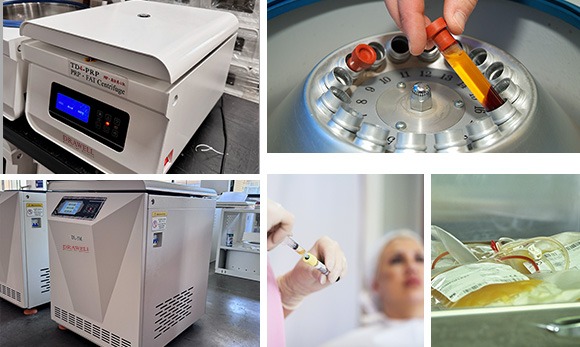
Temperature, Biosafety & Containment: Do You Need Them for Your Runs?
When, and to what extent, temperature control and containment are required depends on sample sensitivity, biosafety level, and downstream needs. Users should evaluate whether refrigeration or heating preserves analytes or enzymatic activity, and whether run duration demands active regulation.
Consider sealed rotors, aerosol-tight lids, and HEPA-filtered exhaust for work with infectious agents or volatile reagents; these features reduce exposure and meet biosafety requirements without overconstraining workflows. Balance containment against throughput and ease of use: more secure systems often limit rotor choices and increase maintenance.
Also factor in decontamination procedures, compatible materials, and certification needs for regulated environments. Selecting appropriate temperature and containment options lets practitioners keep samples safe while retaining operational freedom and efficiency.
Formats Compared + Buying Checklist: Benchtop, Floor, Micro, Clinical and What to Budget For
Although laboratory workflows vary widely, choosing among benchtop, floor, micro, and clinical centrifuge formats hinges on sample volume, throughput, footprint, and regulatory needs. The detached observer notes benchtop models suit routine labs wanting flexibility and small footprints.
Floor units serve high-throughput operations with larger rotors and durability. Microcentrifuges prioritize speed for minimal-volume molecular work. Clinical centrifuges meet strict standards for diagnostics and sample traceability.
Budgeting should factor purchase price, maintenance contracts, rotor costs, and energy use. Consider future scalability, service availability, and safety certifications when selecting. A concise buying checklist clarifies choices and preserves operational freedom.
- Match format to typical tube types and daily sample load.
- Include long-term maintenance and rotor replacement costs.
- Verify certifications and bench or floor space requirements.
Conclusion
Choosing the right centrifuge requires balancing throughput, sample type and safety needs. Assess required RCF rather than RPM, match rotor type and tube capacity to typical workloads, and determine whether refrigerated operation or biosafety containment is essential. Compare benchtop, floor-standing, micro and clinical formats against lab space and budget constraints. Prioritize durability, calibration and service support to guarantee reliable performance and sample integrity across routine and specialized applications.
…