
A dog grooming course covers essential skills from basic care to advanced styling, including bathing, drying, and brushing for various breeds. Trainees learn to read canine behavior and assess skin health to guarantee safety and comfort. Practical training involves using clippers, brushes dog grooming courses, and nail trimmers with live dogs. Courses also teach sanitation, client communication, and career-building techniques such as mobile services and marketing. Exploring these areas offers a thorough view of the grooming profession’s scope and opportunities.
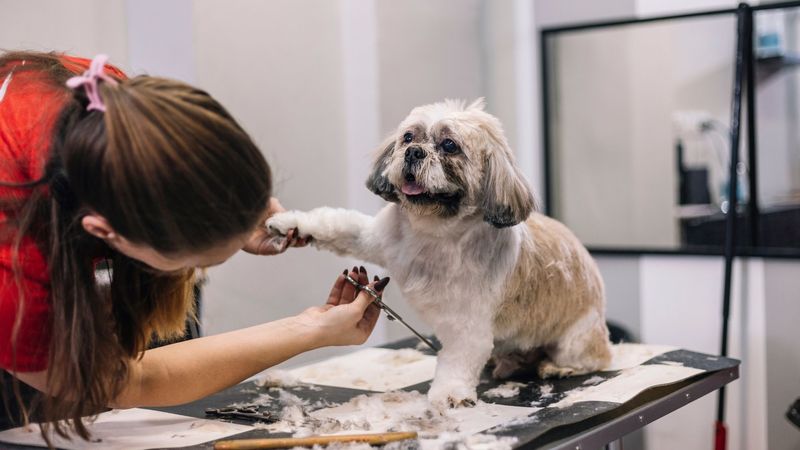
What You Learn in a Dog Grooming Course
In a dog grooming course, students acquire essential skills ranging from basic pet care to advanced styling techniques.
The curriculum typically covers proper bathing, drying, and brushing methods tailored to different breeds. Students learn to use grooming tools safely and effectively, ensuring comfort and safety for the animal.
Nail trimming, ear cleaning, and coat trimming form core practical components, enabling aspiring groomers to enhance a dog’s appearance while maintaining health Cosmos Pet Universe. Emphasis is placed on developing a keen eye for detail and mastering breed-specific styles.
The course also introduces sanitation protocols and client communication skills, empowering students to work professionally and confidently. Overall, the training equips learners with practical expertise to pursue grooming as a flexible and rewarding career path.
Understanding Dog Behavior and Skin Health for Dog Grooming
Recognizing canine behavior and evaluating skin health are fundamental components of effective dog grooming. Understanding a dog’s temperament helps groomers anticipate reactions and create a calm environment, ensuring safety and comfort.
Observing body language such as tail position, ear movement, and eye contact provides insight into stress or relaxation levels. Additionally, assessing skin health is vital; healthy skin appears clean, supple, and free of irritation. Groomers must identify signs of dryness, redness, parasites, or infections that could affect grooming choices or indicate the need for veterinary attention.
Mastery of these observational skills empowers groomers to tailor their approach respectfully, fostering trust and promoting a positive grooming experience that honors each dog’s individual needs and well-being.
How to Use Essential Dog Grooming Tools and Techniques
Several essential tools form the foundation of effective dog grooming, each designed to address specific coat types and grooming needs. Clippers and scissors allow for controlled trimming, shaping the coat while respecting the dog’s natural lines.
Brushes, such as slicker or bristle types, remove loose hair and prevent mats, promoting skin health. Combs help detangle and inspect for parasites or debris. Nail clippers maintain paw comfort and safety.
Proper use involves understanding each tool’s purpose and applying techniques gently but confidently, respecting the animal’s comfort and movement. Mastery of these tools grants the groomer freedom to adapt styles and care routines, ensuring every dog receives tailored attention.
This foundational knowledge enables grooming that balances precision with respect for the dog’s natural state.

Getting Real Practice With Dogs: Hands-On Training
Mastering grooming tools is only the initial step; applying these skills on live dogs brings the learning process to life. Hands-on training transforms theoretical knowledge into practical expertise, enhancing confidence and technique. During this phase, students engage directly with animals under supervision, refining their touch and timing.
Key components of effective hands-on practice include:
- Adapting to individual dog temperaments, ensuring comfort and safety for both groomer and pet.
- Developing efficient workflows, balancing thoroughness with speed to respect the dog’s patience.
- Observing real-time feedback from dogs to adjust methods, promoting trust and cooperation.
This immersive experience cultivates freedom in skill application, empowering learners to groom confidently across diverse breeds and behaviors.
How to Turn Dog Grooming Skills Into a Career or Side Hustle
Transforming dog grooming skills into a viable career or side hustle requires strategic planning and dedication.
Individuals seeking freedom can leverage their expertise by offering mobile grooming services, catering to clients who value convenience.
Establishing a strong online presence through social media and local listings helps attract and retain customers.
Setting clear pricing, maintaining quality, and prioritizing client relationships build trust and repeat business.
Additionally, pursuing certifications enhances credibility, opening doors to higher-paying opportunities or partnerships.
For those balancing other commitments, part-time grooming allows flexible income without sacrificing autonomy.
Conclusion
A dog grooming course offers thorough knowledge, from understanding canine behavior and skin health to mastering grooming tools and techniques. Hands-on practice with real dogs reinforces these skills, ensuring practical experience. Beyond skill acquisition, such courses provide pathways to transform grooming abilities into viable careers or side hustles. Overall, the learning journey equips individuals with both the expertise and confidence needed to succeed in the professional dog grooming industry.